One tiny garment managed to ignite outrage, provoke bans, and even lead to arrests around the world. In the long-standing tug-of-war between modesty and freedom, the bikini emerged as both a villain and a symbol of liberation. Popes condemned it as sinful, governments outlawed it, and yet women, determined to claim their space, kept wearing it—reshaping cultural expectations one bold appearance at a time.
At the dawn of the 20th century, swimsuits were a far cry from the sleek designs we know today. They were heavy, full-body garments made from wool, built not for fashion, but to uphold modesty and shield swimmers from the sun. Strict dress codes governed public beaches across the United States. In Chicago’s Clarendon Beach, tailors were stationed on-site to quickly sew up swimsuits deemed too revealing. In Coney Island, bathing socks were banned in 1915 if they exposed a woman’s “dimpled knees.” Washington, D.C.’s beach police famously patrolled with tape measures to ensure swimsuits met the mandated standards.
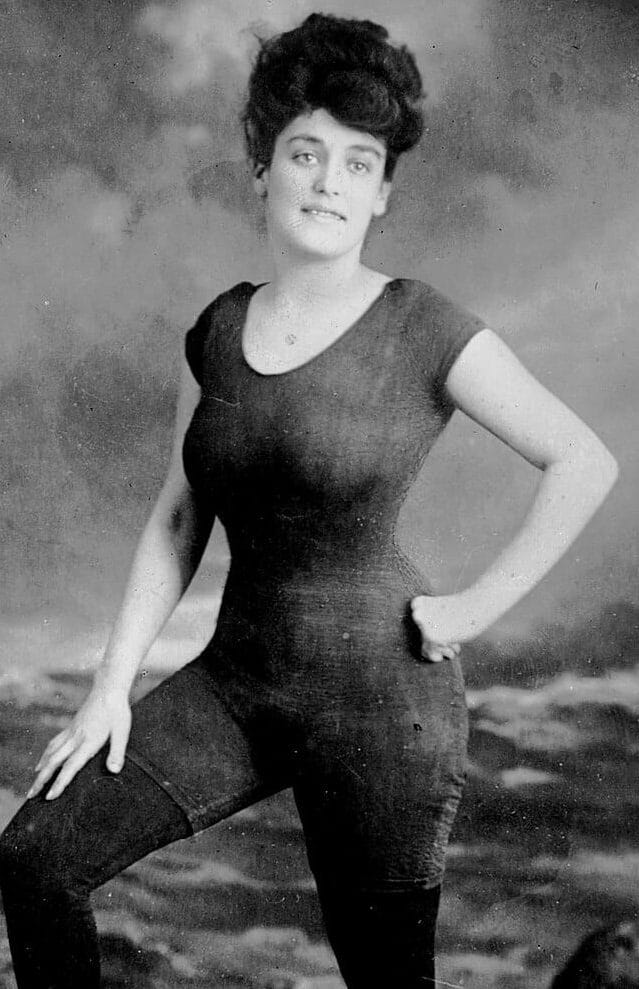
The early 1900s demanded full coverage, with swimsuits extending from neck to knee. Exposing any additional skin risked being labeled scandalous. But the tides of change were inevitable. In 1907, Australian swimmer Annette Kellerman dared to challenge the norms by donning a one-piece suit that revealed her arms, legs, and neck—eschewing the bulky pantaloons of the day. Known as “the Australian Mermaid,” Kellerman’s revolutionary swimwear reportedly led to her arrest, though official records are scarce. Still, the moment made headlines and helped spark a swimwear revolution. Her one-piece design gained immense popularity, culminating in her own line of swimwear, the “Annette Kellermans,” marking the first significant step toward modern women’s swimwear.
As the 1920s roared on, societal shifts accelerated. The era’s flapper culture began influencing beachwear too. In California, a group dubbed the “skirts be hanged girls” rebelled against traditional expectations by advocating for practical, form-fitting swimsuits that allowed freedom of movement. Swimsuits slowly grew more liberating, even though they remained relatively modest by today’s standards. Fashion was changing—but the true upheaval was still to come.

In 1946, the bikini burst onto the scene. French engineer Louis Réard introduced the now-iconic two-piece swimsuit that revealed the navel and far more skin than anyone had dared before. The timing was provocative; just days earlier, the U.S. had conducted a nuclear test at Bikini Atoll. Whether coincidental or deliberate, the choice of name suggested the swimsuit’s explosive impact. Public reaction was fierce. Bikinis were banned from many beaches, both in the U.S. and abroad. France outlawed them in 1949, and German public pools banned them until the 1970s. Communist groups slammed the bikini as a symbol of capitalist immorality. Pope Pius XII declared it sinful, and countries like Belgium, Italy, Portugal, and Spain imposed nationwide bans. In 1952, Australian model Ann Ferguson was famously asked to leave Surfers Paradise beach for wearing a bikini deemed too revealing.
One iconic photo captured the era’s tension: a man in uniform standing beside a young woman in a bikini on an Italian beach, allegedly ticketing her for indecency. While the photo itself is authentic, the full story behind it remains unclear. Gianluca Braschi, director of the State Archives of Rimini, confirmed that indecent swimwear laws were in place in Italy at the time, though enforcement varied widely. The viral image, regardless of its specifics, embodies the real cultural battles over public decency and women’s freedom.